
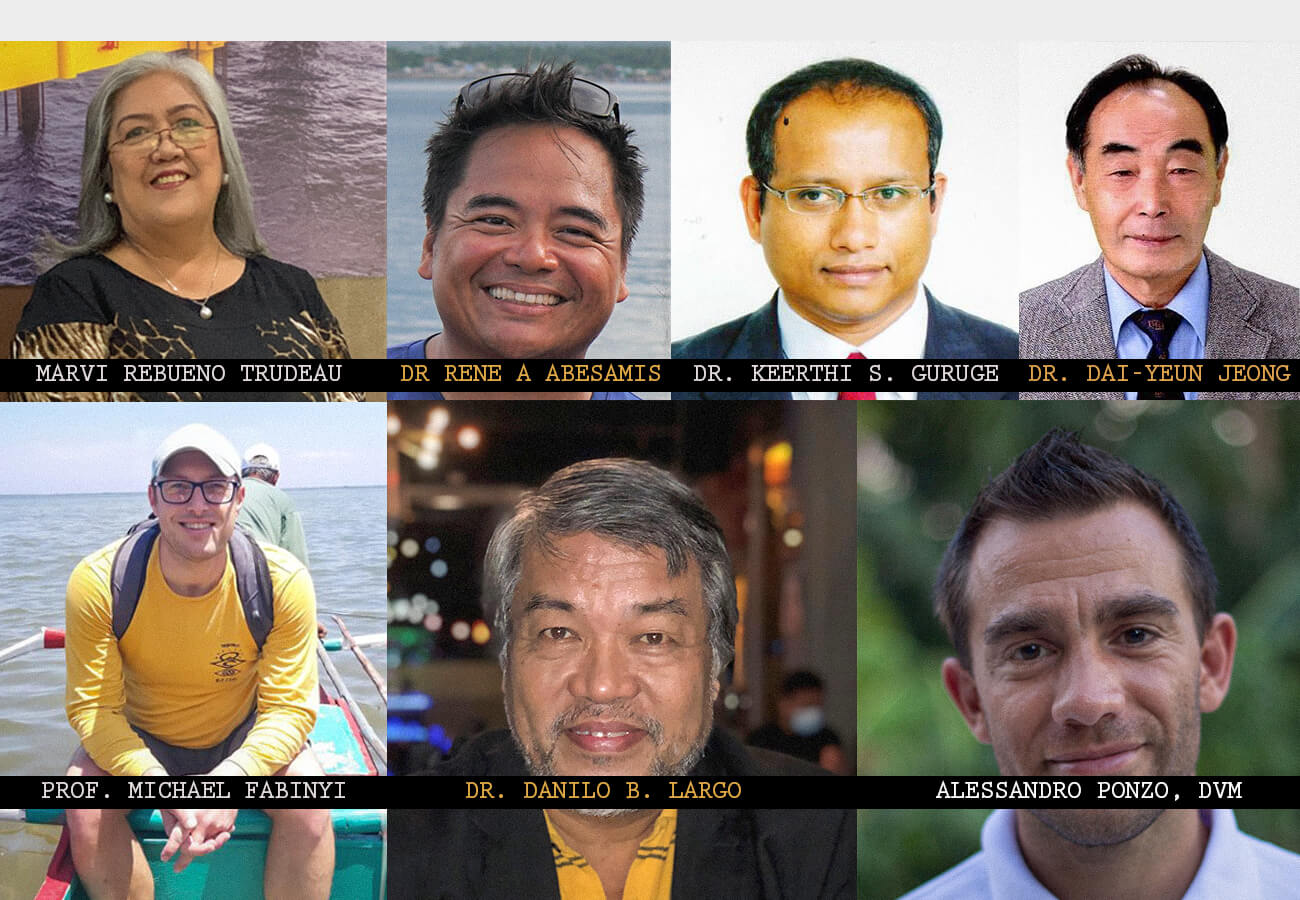
The upcoming West Philippine Sea conference, themed “West Philippine Sea Matters: Sustaining a Healthy, Resilient, and Productive Sea and People,” will feature a distinguished array of speakers poised to offer critical insights from their diverse fields. Dr. Danilo B. Largo, an eminent Aquatic Environmental Scientist, will provide expertise on sustainable aquaculture practices such as Integrated Multi-trophic Aquaculture (IMTA) and the cultivation of Sargassum, offering solutions for productive marine utilization that also prioritize ecological health through ecosystem services and the extraction of high-value natural products. His deep understanding of seaweed mariculture and disease management, including the ‘ice-ice’ disease, is vital for ensuring the resilience and productivity of marine farming in the region.
Dr. Alessandro Ponzo, a veterinarian and co-founder of the Large Marine Vertebrates Research Institute Philippines (LAMAVE), will highlight the conservation of endangered marine megafauna in critical areas like Palawan’s West Coast, a proposed “hope spot”. His insights will address urgent conservation issues such as unsustainable fisheries, marine turtle poaching, and illegal wildlife trade, emphasizing the role of robust marine wildlife populations as indicators of a healthy and resilient sea. Similarly, Dr. Rene A. Abesamis, an Associate Professor at the University of the Philippines-Marine Science Institute, will share his extensive knowledge on coral reef fish ecology and the strategic design of marine protected area networks, crucial for enhancing fisheries management and biodiversity conservation. His work directly contributes to understanding how to maintain a productive and resilient marine environment, including the identification and protection of climate-resilient coral reefs.
Professor Michael Fabinyi, an environmental social scientist from the University of Technology Sydney, will provide a crucial socio-economic and governance perspective. His research focuses on the intricate dynamics of small-scale fisheries and coastal livelihoods in the Philippines, the broader seafood trade across the Asia-Pacific, and China’s evolving role in global ocean governance. Having conducted research in Palawan since 2005, Professor Fabinyi’s insights will be invaluable for understanding the human dimensions of marine resource use, promoting equitable resource management, and fostering sustainable livelihoods for coastal communities.
Addressing emerging environmental threats, Dr. Keerthi S. Guruge, a leading environmental chemist and toxicologist from Japan’s National Institute of Animal Health-NARO, will present on microplastics as emerging pollutants and vectors of risk in aquatic ecosystems. His discussion will underscore how these pervasive particles not only degrade marine environments but also act as carriers for toxic chemicals and drug-resistant bacteria, directly impacting the “healthy” aspect of the sea and potentially human health. This technical perspective is essential for developing comprehensive strategies to mitigate novel forms of marine pollution.
From a policy and governance standpoint, Professor Dai-Yeun Jeong, Director of the Asia Climate Change Education Center, will articulate a desirable framework for establishing effective climate change policies. His presentation will guide discussions on how to identify vulnerable sectors, mobilize resources, build social consensus, and enhance government capacity for successful policy implementation. These insights are fundamental for crafting long-term strategies that promote resilience and productivity in the face of climate change impacts on the West Philippine Sea.
Finally, Marvi Rebueno Trudeau, a seasoned social development professional and a Strategic Environmental Plan Champion for Palawan, will bring over two decades of experience in designing and implementing community-based, multi-sectoral projects that address poverty, public health crises, and environmental degradation. Her active involvement with the Palawan Council for Sustainable Development on marine resource initiatives and her focus on livelihood support and sustainable energy access will provide practical strategies for ensuring the “productive sea and people” aspect through inclusive development and community empowerment.
Comments are closed